How Lawn Flamingos Became An American Icon
Lawn flamingos have taken on a life of their own across America. These bright pink yard decorations are almost impossible to miss. They feel quirky, lighthearted, and just a little bit kitschy; but that’s part of why they’ve stuck around for so many decades. Here’s what makes the lawn flamingo such an enduring American icon and how it ended up earning its place in yards coast to coast.
How the Lawn Flamingo Was Born
The very first plastic pink flamingo was the brainchild of a designer named Don Featherstone in 1957. Working for Union Products, a company in Leominster, Massachusetts, Featherstone was asked to design a new addition for a growing line of molded plastic lawn decor.
Plastic was the hot new thing in the postwar era. Americans were moving to the suburbs, and people wanted their homes to feel cheerful and unique. The flamingo quickly fit that bill. Featherstone based his flamingo model on images from National Geographic, nailing the curvy neck and signature color. The result? A sassy, unmistakable lawn accessory that turned more than a few heads.
It didn’t take long for these birds to fly off the shelves, especially as they stood out from the metal and concrete ornaments that filled yards at the time. Union Products cranked out thousands of the flamingos, and with that, an unusual American tradition was born.
The Flamingo’s Rise to Suburban Stardom
Pink flamingos found a sweet spot as a playful twist in tidy postwar suburbs. While some folks loved them for their bold, tongue-in-cheek vibe, others saw them as tacky or over the top. This clash is a big reason behind their lasting charm.
In the 1960s and ‘70s, having a couple plastic flamingos in the yard was a clever way to poke fun at “proper” lawn decor. They became a symbol for not taking things too seriously, a little rebellion without breaking any rules. Eventually, their popularity got a boost from quirky movies and art, which treated them as classic symbols of kitsch and Americana. John Waters, for example, made the pink flamingo famous in his cult film “Pink Flamingos.” That movie gave the lawn flamingo a wink toward camp culture, making them even more appealing to those who love things a little offbeat.
A Closer Look at Flamingo Appeal
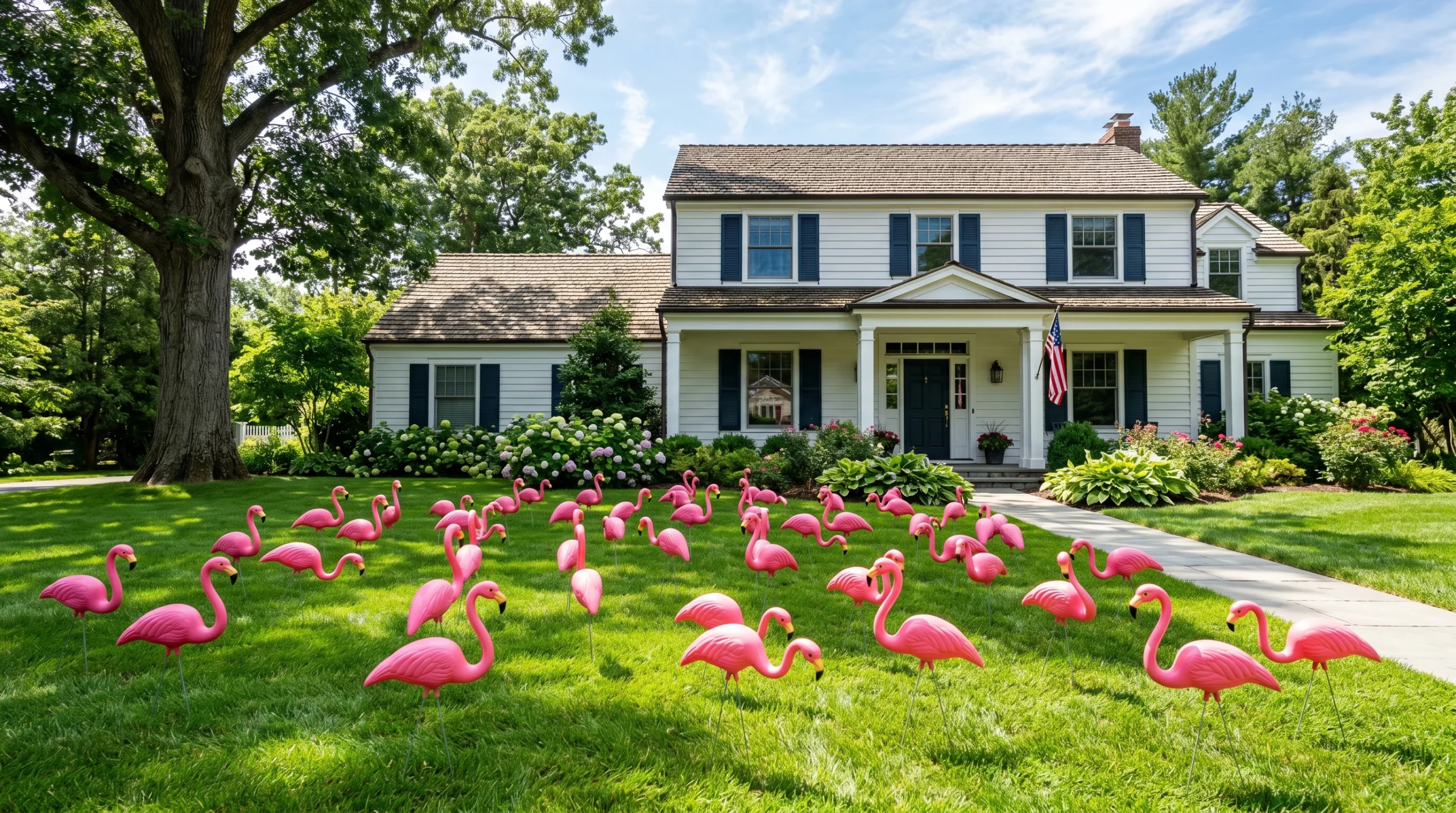
On paper, it seems a little wild that a plastic bird could make such a big impact. But their bold color and simple shapes help them pop in almost any yard. They also allow for lots of personality. People use them for everything, from birthday greetings to practical jokes known as “flocking,” where a whole yard gets covered in flamingos as a surprise.
These flamingos are popular with collectors too. Some folks hunt down Featherstone originals, while others want rare versions with unique poses or offbeat colors. Even businesses and groups use flamingos as logos and to drum up attention during charity drives. The versatility seriously adds to their magic.
The charm of a lawn flamingo can go deeper: people who decorate with these birds often swap stories about their own first flamingo or memorable “flocking” they organized in their community. Some see them as a nostalgic nod to old-school lawn decor, and some appreciate them purely for their next-level cool pop of color against green lawns. The way flamingos let homeowners have fun with their yards makes them special, encouraging a little friendly competition for the coolest yard on the block.
What Plastic Flamingos Say About American Culture
For me, the quirky charm of a lawn flamingo says a lot about how Americans approach home and humor. They mix up nostalgia, fun, and just the right amount of goofiness into one colorful package. Flamingos let you take a little pride in standing out, which fits right in with the American love of individual expression.
Flamingos are also a gentle send-up of the “keeping up with the Joneses” vibe that sometimes sneaks into suburban life. They show it’s okay to not take your yard, or yourself, too seriously. If anything, they’re a celebration of originality over conformity, which definitely speaks to the American spirit I see in neighborhoods everywhere.
How to Spot an Original Lawn Flamingo
True Featherstone flamingos have a little signature pressed into the plastic, right near the tail or under one wing. These originals are popular with collectors and command higher prices than newer versions. After Union Products closed in 2006, other manufacturers started making their own versions, but many fans say they just don’t have the same character as Featherstone’s designs.
If you want to hunt down an authentic flamingo, checking for the signature is pretty important. The original style and color (“Featherstone pink”) really stand out. Plenty of copycats use different shades or lack the quirky sculpted details that make the original so memorable.
Another detail to keep in mind: Featherstone’s flamingos often come with metal legs that poke into the ground. They tend to be more robust than their modern plastic-legged counterparts. If you’re hoping for that vintage flair, metal legs and a subtle, molded signature under the wing are your best clues. Collectors even have favorite production years, aiming to track down early models for that authentic retro vibe.
Fun Ways to Use Lawn Flamingos at Home
- Pop of color in the garden: A couple flamingos can jazz up flowerbeds and bring a playful touch to your landscaping.
- Occasion statement: Neighbors use them to mark milestones; birthdays, retirements, and anniversaries all get the flamingo treatment.
- Yard pranks (“flocking”): Local groups offer yard “flockings” as a fundraiser or just for laughs. Finding a flood of flamingos outside is guaranteed to get a reaction.
- Theme parties: From retro tiki parties to backyard BBQs, flamingos set the mood better than almost any other lawn ornament.
- Garden markers: Some creative gardeners stick smaller flamingos in their herb or vegetable patches to add some whimsy and help mark rows or favorite plants.
Why Flamingos Lasted When So Many Fads Didn’t
Most fad lawn decorations come and go, but flamingos have weathered trends and decades of changing taste. For me, the difference comes down to sheer personality. They’re more than just a decoration; they spark conversations, they make people smile, and they offer a little nostalgia for simpler times.
These birds have even made their way into pop culture, with cities like Leominster holding annual flamingo festivals and teams across the country using them as mascots or good-luck charms. Social media has given them a new platform too, as people photograph flocks for Instagram or use them as centerpieces at weddings and graduation parties.
Modern artists have gotten in on the act, too. Some installations feature massive groups of flamingos in city parks, while crafters customize their own with paint, glitter, or LED lights for a truly eye-catching effect. No matter how you use them, there’s a certain nostalgia and sense of fun that flamingos bring, keeping them on trend even as tastes change.
Lawn Flamingos in Real Life: Examples That Stand Out
- Madison, Wisconsin: In 1979, UW–Madison students famously covered Bascom Hill with over a thousand flamingos as a prank. That moment is now part of local legend, and the flamingo was named the city’s official bird in 2009.
- Leominster, Massachusetts: As the birthplace of the plastic flamingo, the town hosts annual festivals and even features a huge flamingo statue downtown to celebrate its quirky contribution to American culture.
- Neighborhood flocking fundraisers: All over the country, you’ll find groups “flocking” lawns to raise money for schools, sports teams, or local charities, giving this lighthearted prank a feel-good twist.
- Florida Keys roadside attractions: Dozens of roadside stops across Florida feature giant flamingos for travelers to snap a photo or two, embracing the bird as a state symbol in both decor and tourism.
Why I Think Lawn Flamingos Still Rule
Even as trends come and go, lawn flamingos have a way of sticking around. They blend humor, nostalgia, and personality in a way that few other yard decorations pull off. While opinions might be split on their style, you can’t deny they add a spark of individuality to the neighborhoods they grace. For a lot of folks, that bright pink bird will always bring a little smile; and that’s a pretty cool legacy for any piece of plastic.